Canada
University of Victoria
-
2019
Privately funded study abroad
- Mei Tanigawa
- I had a very valuable experience studying abroad for about 7 months. The language school I went to, UVIC, has one-month and three-month programs, and since the school is closed in December, I took two three-month programs in a six-month period. There were a lot of Japanese people in the first semester of the program, which was different from what I had imagined in Japan, and I was a bit confused.

On the first day of the early program, there was an orientation and a test was taken to determine class placement, but my English skills were very poor so I started out in the lower class.
The next day, classes started, and out of the 14 students in my class, 10 were Japanese and 4 were international students. This program was divided into morning and afternoon groups, and I was in the morning group, so on Mondays I had elective classes, and classes were from 8:12 to 45:XNUMX every day from Tuesday to Friday, so on Mondays I was in a different class.
The flow of the classes in the first semester program was mainly that the teacher used a document camera and divided the classes into different fields each time. The most memorable class was when we made a PowerPoint presentation in English about where we live. In the elective classes, we learned how to write sentences and how to make our own games and learn English through presentations.
The last week of the first semester is a test week, with tests in speaking, writing, listening and reading taking place, marking the end of the first semester.
Next, the second semester program was different from the first semester in that I was in a completely new class and with a completely new teacher. I feel that this second semester program has helped me grow a lot. The flow of the program was the same as the first semester, but the class size was small, with only nine students, two of whom were Japanese, including me, and seven were international students from other countries, so I was able to take classes in a great environment. Also, the teachers' teaching methods were excellent, and for the first time in my life, I felt that learning English could be so much fun.
What was especially good was that if there was something I didn't understand, they would give me handouts individually, I could ask them by email at any time, and they would correct my diary entries every time. On the other hand, in elective courses, we decided on a theme and made our own original radio show, and we learned about environmental issues. Thanks to this second-term program, I was able to improve my grades.
Due to the influence of COVID-19, tests in the second semester were held online, but thanks to our teachers we were able to complete them successfully.
My future study plan is to improve my TOEIC score. I still have a long way to go, but I believe that I will be able to make studying a habit and be able to do things I couldn't do before, so I will continue to work hard every day. Thank you for giving me such a wonderful experience.
Short-term language training
- Akama Reina
- I was originally scheduled to stay in Canada for one month for this language training, but due to the influence of the coronavirus, my stay was shortened to 1 days. It was a shame that it was cut short, but I was able to experience a great sense of accomplishment and fulfillment that made me not even notice it. I went to Canada and learned many cultural differences. The most shocking thing was the difference in daily rhythm. My host family was a family of three: parents and children. They went to bed at 2 p.m. and woke up at 0 a.m., and were a very healthy family. My host father came home at 3 p.m. every day, and we had dinner together before 9 p.m. For me, it was rare for my father to come home early, and I felt that it was wonderful to be able to eat dinner every day while communicating with my family. After dinner, the family often talked and played cards, and I felt that they really valued family time. I also experienced the kindness of Canadians and the warmth of the whole town.
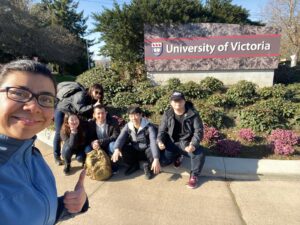
My host family was close to the university, and I walked there. On the first day of class, my teacher told me, "If you want to improve your English, talk to native speakers a lot and absorb everything." I did as he said, and from the next day, I decided to talk to students from UVIc (University of Victoria) who were on the same route to school. When I talked to them, they listened to my halting English. I learned a lot about what they were studying and where they were from. When I actually talked to them, I realized how little I could speak English, and my vocabulary was lacking, and it stimulated my motivation to study. At the same time, I realized how kind Canadians are, as they would talk back to me on the street. I often used the bus, and I felt their kindness there too. When an elderly person got on the bus, everyone stood up and gave up their seat, and they even folded up the chair for the person in their pushcart. I was really impressed by how common it was for children and adults alike. In Japan, priority seats are often left empty, but not everyone does this, so I thought it was amazing. Furthermore, on the bus, almost everyone would say "Thank you" to the driver in a loud voice when getting off. I thought that this is something that Japanese people would not say. I thought it was wonderful that there is such a culture where people can directly express their gratitude to others.
I learned many things other than English during this study abroad. In addition to Japanese students, there were many Koreans and Chinese students at the university. Since everyone was studying abroad to improve their English, it was natural that everyone was motivated and it was a good stimulus. I thought it would be unthinkable to see them speak up to speak English during class and answer the teacher's questions every time at a Japanese university. By participating in the class, I was able to learn more than if I remained silent, and I was able to learn the importance of being proactive. In addition, listening to my friends' attitudes toward English and their thoughts about the future allowed me to reconsider my own way of thinking and outlook on life.
Finally, as for my future study plans, I would like to first consider taking the TOEIC test. I would also like to aim for a high score for job hunting. After graduation, I would like to work in a job that involves English, such as a kindergarten teacher, so I decided to think more about my future. I would also like to study abroad again to improve my level.
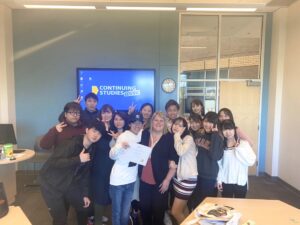

- Harutaro Isaka
- Although I only stayed for a short period of one month, I was able to experience many things that I could not have experienced in Japan. Of course, I learned English, but by comparing the various aspects of the country, such as culture, food, and history, with Japan, I was able to make some interesting discoveries and discoveries.
First of all, shortly after arriving in Canada, my luggage was suddenly lost and I lost contact with my host family. The things my teachers and parents had warned me about started to happen one after another, and to be honest, I was very anxious. Then, a Canadian woman found me, who was at a loss, and asked me what was wrong. Thanks to her, I was able to meet my host family safely and retrieve my luggage. I was able to experience the warmth of the Canadian people and get off to a good start.
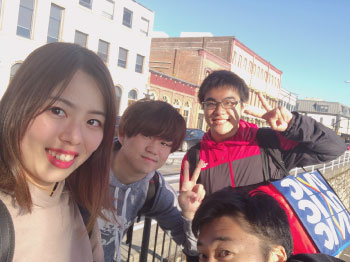
At the beginning of my life in Canada, I got lost and couldn't communicate easily, which really bothered my host family. The fatigue caused by jet lag and other phenomena I had never experienced before and the unfamiliar environment were pushing me harder than I had imagined. Even in my studies at the University of Victoria, I listened to and spoke different languages all day long, so I exhausted my concentration and went to bed around 10 o'clock every day. However, that was only at the beginning, and I soon got used to life there, and the difficulties naturally decreased, and before I knew it, I was enjoying every day. I started to get along with my classmates, and after afternoon classes, we played basketball, went shopping in Victoria, and did our homework together, so every day was very fulfilling. Every Friday, we had outdoor activities and went sightseeing to famous places in Victoria, so there was a lot to learn other than studying English. Also, on weekends, I was able to go to areas other than Victoria and experience various activities, and I even went on a one-day trip to Vancouver. In addition to the grammar and composition classes that I usually study at university, the weekday classes also taught me the finer points of pronunciation and I was also able to try making presentations in English, which I don't usually do. I was given a lot of homework, and it was designed to help me remember what I learned, and although I was sometimes overwhelmed by the amount, I worked together with my classmates to complete it every day. That effort paid off in the final test, and perhaps because I was more relaxed than the first test, I even enjoyed it. I gradually began to be able to communicate with my host family, and as the whole family talked about the events of the day at dinner, I was able to clearly understand the unexpected things about Canada and the differences between Canada and Japan.When I returned to Japan, I almost cried when my host family hugged me after I handed them my letter. Thanks to their support in my daily life, I was able to spend my time happily and energetically. It was a very valuable experience for me. I will not let this experience go to waste and will do my best in my future university life.
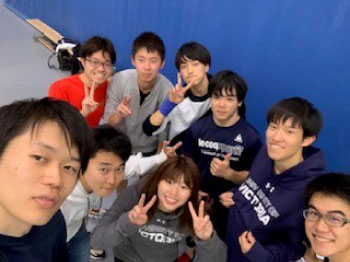
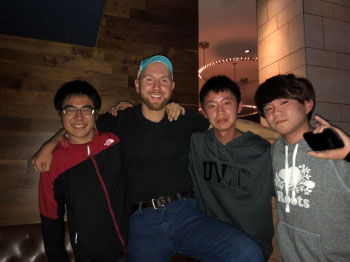
-
2018
Short-term language training
- Yuuka Enomoto
- I studied abroad at the University of Victoria in Canada for about a month in September, and learned a lot there. Wherever I walked, I heard the sound of English, which was a very good environment for me, who wanted to be able to speak English. However, it was also a little scary for me, as I still couldn't hear English properly and couldn't express my thoughts well in English. I went to an unfamiliar place and couldn't communicate Japanese at all, so I was full of anxiety at first.
When I got lost and asked people walking down the street for directions, everyone was very kind and explained the way. When I couldn't find the bus stop and asked the bus driver, he said, "You don't have to pay. I'll take you there," and took me there. Victoria has many kind and friendly people, and I think it's a very comfortable place to live. The buildings and scenery were also beautiful. There were many flowers decorated in the city, and people who take care of them kept the city beautiful.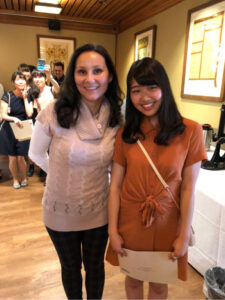
And I think I was blessed with a very good host family. My host family was a family of three, the father was a museum employee, the mother was an elementary school teacher, and there was a 3-year-old boy. Almost every day, the father and mother asked me, "Do you need help with your homework?" and "How was your day today?", giving me the opportunity to speak English. They also said, "We'll help you with your English," and asked me lots of questions. The 10-year-old boy taught me the games that were popular at his elementary school, and we had fun playing together. They cooked delicious dinner every night, took me to shopping malls on their days off, and were really the best host family.
At school, I studied in class 0A. All classes were prohibited from using any language other than English, which was a little difficult, but I was able to attend class on time every day without missing a day. Most of my classmates were Japanese, with only a few Thai students. If I had been in a class where I could hear the pronunciation of English speakers, I think I would have been able to improve my English. I found out towards the end of my study abroad that the class I was assigned to was at the lowest level. Since the class placement was based on a test on the first day of study abroad, there was nothing I could do about it, but I was really disappointed. I thought that if I had studied English more before coming to Canada, I could have gone to a higher class. Using this regret and the regret I felt for not being able to use English as I wanted for a month as a springboard, I will put more effort into studying English in Japan than ever before. And I will try to study abroad with my improved English.


- Pham Thi Van Anh
- This time, studying abroad in Canada was my first experience going abroad. I experienced new things, met new people, and experienced a new environment, and I was able to have wonderful relationships and a good environment.
I was very grateful that my host family came to pick me up when I arrived at Victoria Airport. Even though the flight was delayed and I couldn't contact my host family, and I had to wait a long time, my host family said with a smile, "I'm glad you made it to Canada safely." That was the best thing for me.
My host mother was Taiwanese, so she was good at Asian cuisine, and since she had just started studying Japanese, we became friendly with each other naturally, without feeling embarrassed. We taught each other how to study English and Japanese, and enjoyed meals together.
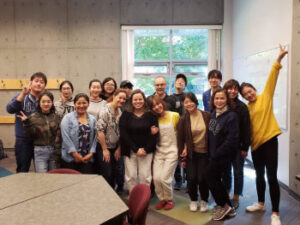
When I had a problem, they worried about me as if it were their own problem, and helped me solve it. I'm really glad I was able to spend a month with such a wonderful family.I have two English teachers, Mr. Paul who helped me learn listening and speaking skills, and Mr. Neil who taught me reading and writing skills focusing on many topics (life stories, travel, Canadian culture, etc.).
I loved the interesting and meaningful lessons from both teachers, and even though the vocabulary of the topics was very academic, I was never bored.
The amount of improvement in my English so far has been great. It has reaffirmed my motivation to study.This time, I was able to go to a language school and learned a lot there. In addition to studying English, I also made many friends through interacting with people from different countries. I think this experience will enrich my life in the future.

-
2017
Short-term language training
- Minoru Shibata
- This was my first time studying abroad, and I felt many cultural differences between Japan and other countries. For example, in Canada, people are very considerate, and when riding a bus, if an elderly person, pregnant woman, or person with a stroller gets on, it is considered good manners to give up your seat immediately and hold the door open for the next person. Perhaps because of this, I was surprised to see many elderly people shopping alone in electric wheelchairs in the city, and cars always stop for pedestrians trying to cross the street. When it comes to transportation in Canada, bicycles, especially sports bicycles, are often used as a means of transportation, and they naturally ride in the middle of the road and use hand signals to indicate the direction to go. Buses running in Victoria allow bicycles to be carried at the front of the bus, and many people ride their bicycles after driving to the nearest bus stop to their destination.

The different cultures I felt were not only Canadian; there were people from various countries in the program, so I was able to talk to them about the food and culture of my country. I remember my teacher talking in class about the differences between countries, saying that Asians are very punctual and Brazilians don't care about time at all, so if you hold a party from 5 o'clock, the Asians will come first and get drunk and start to leave, and then the Brazilians will come, so it's like having two parties. At first I was shocked by the cultural differences, but I found them very interesting and realized that they were a way to feel the goodness of the country and the people.
On the other hand, regarding improving my own English, before I went to study abroad, I would think in Japanese and then translate into English, so when I first went to Canada, I would unconsciously say sorry in Japanese. As I got used to life in Canada, I got used to thinking in English, so when I came back to Japan, I would immediately speak in English. I also realized how little vocabulary I had, so I would like to study English more from now on.
Finally, I would like to thank my host family, the university staff, and the students in the program for treating me so well. I hope to use this experience to not only improve my English skills, but also become someone who can sincerely interact with people who have different ways of thinking than me when I get a job in the future.
Australia
Southern Cross University
-
2022
Short-term language training (online study abroad)
- Yin Yue
- I participated in a short-term language training program at Southern Cross University online from August 8 to September 15. It was a very fulfilling experience for me.
Class hours are from 9:1 to XNUMX:XNUMX pm Japan time. The course content provides a general introduction to Australia's natural scenery, mainland wildlife, and how local Australians spend their holidays.
All classes are taught in English, and you can take classes casually through group activities, movie watching, etc. Before the first class, I was worried and anxious about the language problem, but after the class, I felt that the teachers were very kind, polite, and responsible. In addition, the curriculum was rich in extracurricular activities, and international exchange activities and exchange activities with host families were held every week.
My favorite event was the host family exchange activity. The international exchange activity was to talk to people of the same generation using English freely with volunteer students from Southern Cross University, and at the same time, I was able to improve my English skills and learn the preferences of young people in Australia and the terms they use, which is something I can't usually learn.
Through the homestay exchange activities, I was able to understand the Australian lifestyle, including the food they eat and how they move around daily, through conversations with the local family owners. What impressed me the most was that the owner of the host family perfectly demonstrated the process of making a traditional Australian breakfast through a video. The food that Australians are most contentious about is vegemite, and while some people believe it can represent Australian food, many Australians think they cannot stand the taste. This piqued my interest and I would like to have the opportunity to taste it.
Although I had many opportunities to speak English in class, I realized my lack of English ability and could not express my feelings perfectly in English. The reason for this is that I do not have enough vocabulary and do not understand English culture. To deal with these two problems, I have no choice but to spend time on memorization practice, and I can cherish my time at school and practice conversation with my English teacher.
I would like to thank the teachers at Southern Cross University. They are very kind and patiently correct students who are not good at English. I would also like to thank Hokkaido Bunkyo University for giving me the opportunity to take their classes. This class enriched my summer vacation.
Short-term language training
- Hikaru Yamada
- Participating in this summer language training program has taught me a lot and had a big impact on me. I had always wanted to study abroad when I went to university, so this was an opportunity I had been waiting for.
I remember how happy I felt when I found out I wanted to study abroad.
Although it was a school-based study abroad program, we made almost all of the financial preparations ourselves, so we were able to understand the funds and procedures for leaving the country, which helped us to further increase our enthusiasm for studying abroad, which was great.
Unfortunately, on the day of our departure, we had some trouble with the airline and were unable to leave as scheduled. Our arrival was delayed by about six days, but this was something I had never experienced before, so I considered it a learning experience. I pulled myself together and made the most of this short trip that was hastily organized.
When I arrived in Australia, to be honest, I didn't feel like I was studying abroad. However, I remember being very nervous when I met my host family. I was very anxious about what kind of people I would be staying with for a month, and what kind of house it would be. However, the moment I met them, all my worries disappeared. They welcomed me with smiles. Kylie is always kind and cheerful, and loves Australia with all her heart. Their daughter Marnie loves card games and is always full of energy. Georgie, the dog who loves people and can't stop jumping, and Myaai, the cat who is good at being cuddly. It is no exaggeration to say that I was able to spend a happy month studying abroad thanks to them.
They took such good care of me and I learned so much from them. Australian plants, animals, food, culture, nature. It's too many to count. We went to many places together. Ballina Beach, Yamba, Lennox Head. Whenever we had free time, we went to the beach and had picnics or went for drives. Every weekday after school, we played cards, cooked, danced, and watched movies. No matter which memory we think of, we talk about it with smiles on our faces. I couldn't talk about my study abroad in Australia without them. I am truly glad that I was able to spend time at their home.
I didn't have any major problems with school life there. The teachers at SCU were all very kind and warm. They paid attention to each student in class, and I felt that the class was created by "everyone," so I think everyone was able to enjoy the class in a natural way. I owe it all to the teachers. Although it's only been a month, I feel that I have improved in terms of my English. I learned a lot of new vocabulary and expressions. I will use this improvement as a springboard to continue studying and aim for even higher levels.
Finally, through this study abroad experience, I have felt the international differences strongly. There are good and bad points of both Australia and Japan. I would not have been able to notice these if I had not gone to Australia. Stepping into a new world as a student in my twenties was a great experience for a naive person like me. I will never forget the excitement, nervousness, anxiety, and fun I felt every day for the past month. I would like to share this experience with many people as a part of my life.

2021
Short-term language training (online study abroad)
- Ami Kawai
- I learned a lot through my online study abroad. I learned a lot of things I didn't know before, such as about Australian creatures and the environment they live in, as well as Australian cityscapes and tourist spots.
Among the many interesting classes, there are two that left a particularly strong impression on me.
The first one was a virtual homestay. It was a class where we communicated with Australian teachers through Zoom, and we discussed various topics. For example, we were introduced to the teachers' homes as a home tour, we discussed the differences between breakfast in Australia and Japan, our favorite movies, and things we can do to help the environment. Each time, we were divided into groups of about 1 to 7 people, and the teacher gave each person a chance to speak, so we had many opportunities to think and speak for ourselves, which was very empowering. Also, the teachers were kind and their reactions were great, so I started to enjoy speaking English more and more, which also helped me gain confidence.
The second class was watching the Australian movie "Red Dog" without Japanese subtitles. There were English subtitles and the pronunciation of the characters' English was easy to understand, so I was able to concentrate and learn very easily. Questions were asked during the movie, and they were questions that could not be answered unless you had a solid understanding of the movie, so I was able to improve my listening skills. The movie itself was also very interesting and captivating, so I was able to learn in a fun way. After that, we split into groups of 2-2 people and enjoyed discussing the movie's contents, such as which character I liked and how I felt about that scene. I don't usually have a chance to watch Australian movies, but through this class I wanted to watch more Australian movies.
This time, we took two classes, but the teachers made it easy for us to understand, so every class was very fun and interesting for a month. It was unfortunate that we couldn't go to Australia in person this time, but the online study abroad gave us many opportunities to talk in groups, so we were able to be exposed to more English and felt satisfied as if we were actually going to Australia. And as I mentioned earlier, the teachers praised us and reacted well, so I gained a lot of confidence in speaking English. To be honest, until now I had been studying English mainly for my grades and for job hunting, but through this online study abroad, speaking English itself became fun, and now my purpose in studying English has changed to wanting to communicate more with foreigners. And since I wanted to continue to be exposed to English even after the online study abroad ended, I am currently using an app called Hello Talk to communicate with foreigners in English. It was a big deal for me to be able to be proactive about English. I would like to continue to be exposed to English and grow so that I can speak English more and more smoothly.
- Takamoto Nozomi
- I participated in the online ENGLISH LANGUAGE PROGRAMS at Southern Cross University in Australia from August 2021rd to September 8th, 23.
The reason I participated in this online study abroad program was because COVID-19 is still spreading around the world and I am unable to study abroad this summer vacation, and because I wanted to create an opportunity to actively be exposed to English.
My goal for this online study abroad was to be more proactive than I was in the spring. My previous goal was to speak up at least once a day, but this time, I answered when the teacher asked me to speak up, and I was also able to express my own opinions, so I think I can give myself a perfect score for this online study abroad. All of my grades on my report card improved, so I'm glad I worked hard in that respect too.
On the first day of the first week, I was in a class with a very high English level because the classes had not yet been divided. There, we learned about koalas, but the conversation speed between the teacher and other students was so fast that I could understand but it was difficult to speak up. There were a lot of people talking one after another, and I wondered if that's how classes should be. From the second day, I was in the Blue Class and took classes with students from a university in Chiba. From then on, the speed of the classes was so fast that I thought it would be okay if they were a little faster. On the fifth day, students from other departments gave group presentations about Australian festivals. The first week passed without any particular difficulties.
In the second week, we learned about theme parks, how to stay safe at the beach, and about tourism in Australia by watching a Vlog by an Australian couple. Up until the second week, it was a week where we could learn about the things we could do if we came to Australia.
In the third week, we learned about environmental issues. We learned about environmental pollution, rising water temperatures, forest fires, endangered species, earthquakes, tsunamis, desertification, acid rain, and other issues that could happen in Japan, so it was very educational. We also learned a lot of English about the weather, and it was really fun to use the words we learned to debate and exchange opinions with our homestay hosts. In the second half of the week, we talked about the ecosystem of the Australian ocean and sharks. We learned that sharks and whales are being harmed by things that are meant to protect humans from sharks, and we thought about how we could protect them by sacrificing one side, since it is wrong to sacrifice the other. I don't think I would have had this experience if I hadn't studied abroad online.
The fourth week was the last week, so I put in extra effort and concentrated. On the first day of the fourth week, four groups made presentations about organizing tours of Australia, and we had a class to grade them. My pair was in charge of the second day, Tuesday. We started making this presentation on Thursday of the third week. This presentation has a big impact on our grades, so we worked hard on it. Thanks to the lots of reading practice the day before, we were able to get a high grade. In the second half of the week, we watched the Australian movie "RED DOG". This movie uses Australian English, so there were some parts I didn't understand, but I thought it was a great movie. It's the Australian version of Hachiko. I talked with my host family about this movie, my favorite movies, and movies I don't like. I introduced five of my favorite movies, including "The Theory of Everything" and "Beauty Inside," and "Parasite" as my least favorite movie. Parasite has some of my favorite actors in it and the story is great, but it's too scary, so I chose it as my least favorite movie. It was great to learn about everyone's recommended movies.
There are two important things I learned from this online study abroad. I think these are important not only for online study abroad but also for study abroad in the field. To act proactively and not to use Japanese when working in a group. First of all, by acting proactively, you can gain confidence and help to encourage those around you. By jumping in first, I don't think it will be a negative for you whether you make a mistake or succeed. It is very important not to use Japanese in group activities. The students at the university in Chiba spoke in Japanese before making a mistake in English even when talking about simple things. I thought this was the biggest hindrance to learning English.
I want to work in a job that requires using foreign languages in the future, so I am studying English, Korean, Chinese, and Spanish, but I think the process and important things in learning all of them are the same. I realized that during this and my previous online study abroad. From now on in my university life, I would like to continue studying languages and also prepare for studying abroad locally.
-
2020
Short-term language training (online study abroad)
- Yumi Otomo
- This study abroad experience was very fulfilling for me.
The class started at 9:XNUMXam Japan time, and in the morning, the students learned about Australian culture and nature. In the afternoon, they had conversations with native speakers, participated in virtual homestays, and participated in virtual tours.
At first, I was very nervous and not able to speak proactively because I was not used to online classes, but the teachers were very kind and I felt motivated to speak proactively even with my poor English.
There was a lot of group work in the morning classes, and I worked together with my classmates, whom I had never met before online, and because everyone was proactive in learning English, I was able to finish my study abroad with a high motivation for learning English. In addition, there were many opportunities to speak, so it was good practice to instantly listen to what the teacher was saying and express my opinion in English. In addition, rather than simply learning grammar and vocabulary, there was also a lot of time to improvise sentences using the newly learned words and grammar. When studying alone, it takes a long time to actually be able to use the new things you have learned, but I think this class allowed me to learn more efficiently.
In the afternoon, I had many opportunities to test my current ability by talking with many native speakers. Many people spoke at a natural speed, and I realized that I need to make more effort to get used to this speed. There were also many opportunities to convey the differences between Japan and Australia and Japanese culture, and I felt that it is important to learn various knowledge in parallel, such as the culture and history of one's own country, rather than just language ability, when learning English.
After completing my four-week study abroad, it was a great opportunity for me to think about my future. This experience made me love Australia even more, and I began to consider working abroad in the future. I will be a third-year student from April, and it will be time to seriously think about my future and take action. Before this study abroad, I had no idea what I wanted to do after graduation, and I studied English without a clear goal. However, this opportunity has allowed me to think more clearly about my future. Since last year, the novel coronavirus has been spreading, and I have been feeling down about what I can do in this situation. I have been trying hard not to waste my precious time, but things have not gone as I had hoped, and I was thinking about what to do in the future. In the midst of all this, I was introduced to this online study abroad program, and by actually experiencing it, I was able to spend the most fulfilling time I have ever had. I would like to continue studying hard so that I can get off to a good start in my third year.
Finally, I would like to thank everyone who supported me in this study abroad experience.
- Narita Hinano
- I felt that this online study abroad program was a program that helped me improve my speaking, listening, and reading skills out of the four skills of speaking, reading, listening, and writing.
In the first week, I learned about the difference in etiquette between Australia and Japan, vocabulary that can be used during homestays, and about Australia (a virtual tour of a koala hospital and tourist attractions). During this week, I couldn't understand my teacher's English at all and couldn't speak up during class. At this point, I was able to confirm how poor my English speaking and listening skills were.
In the second week, I increased my grammar and vocabulary, prepared for a presentation about annual events and festivals in Australia to be given in the fourth week, continued to learn about Australia (major foods and festivals, etc.) and tourist attractions in Australia from the previous week, and had conversations with my homestay family in a simulated homestay experience, so it felt like I had a closer experience to a real study abroad experience than the first week. During this week, I was able to understand English and express my opinions better than the previous week, but there were still some parts I couldn't understand and it was difficult to convey my thoughts to others.
In the third week, we learned about animals and animal protection organizations in Australia, and had to think up questions to ask our homestay family, which helped us to have more natural conversations. Our homestay family also gave us a room tour of their house. This week, we spent a lot of time reading English websites about animals we didn't know about, and shared that information with our classmates, which I felt was a very participatory class. We also got to see our homestay family's house and get a feel for what it would be like to actually stay with them. Since I started to understand English little by little from this week, I was able to speak up in class, and my conversations with my homestay family didn't end with just one word like "Yes," and I was able to have more natural conversations, which gave me a little confidence in my English ability.
In the fourth week, I gave a presentation about Australian events and festivals, and planned an itinerary for my visit to Australia. I also had time to communicate with my host family. I think this week was a week where I was able to improve my English skills. This is because in the presentation, I had to demonstrate what I had learned in the past four weeks, such as conveying things that others did not know in English, and in my own words. This week, I had a lot more to say than the previous week, and I tried to do so, but I often found myself unable to express my thoughts well because I did not have enough vocabulary and did not know how to express myself.
This month was a great opportunity to have a simulated study abroad experience, which clarified what I need to do now. I have hardly ever had a conversation with a native speaker, but now that I'm used to it, I want to actively converse with native teachers at this university. I also want to study vocabulary and grammar repeatedly until I can recall them immediately when I converse in English, and as I realized during my study abroad that it is important to listen to English every day, I want to find the time to do so.
- Yuki Murai
- Through this online study abroad program with Southern Cross University, I realized with my current level of English ability that I am only able to understand what is being said and am not at the level of being able to converse.
I was not good at English in junior high school and high school, and I didn't even try to learn it. When I was in high school, a friend who had the same level of English ability as me studied abroad in the United States and returned after two years fluent in English. At that time, I also wanted to study abroad someday, so I decided to enroll in Bunkyo University. I wanted to study abroad even though I was not good at English, learn the basics of English by the second year, and study abroad in the third year. However, since last year, the coronavirus has been spreading, and it has become impossible to study abroad from Bunkyo University. At that time, I found out about this online study abroad program with Southern Cross University in Australia, and thought it would be a good opportunity, so I decided to experience it.
The online study abroad program with Southern Cross University started on March 3st, with three hours of classes per day, starting at 1:1 and with a 3-minute break every hour. From 9:1, there is a 15-minute lunch break, so you can take your time eating your lunch. There are classes on weekdays, and the total duration is four weeks.
The first thing I noticed when I participated in the online study abroad program was the difference in listening and speaking ability. I could read the text to some extent, but when I was asked a question and called on, I couldn't hear it, and even when I managed to understand it, I couldn't immediately translate it into English and convey it. Once again, I was painfully aware of my poor English ability. In the first lesson, the teacher asked me simple questions about recent events and my favorite things and I answered them. Since it was really simple questions, even I was able to keep up.
Now onto the main topic. The lesson content was broadly about the differences between Australian culture and Japanese culture. In more detail, we learned about Australian animals, manners, nature, festivals, etc. For example, when we think of Australian animals, koalas and kangaroos are the most well-known. Baby marsupials such as koalas and kangaroos are called "joeys." Australians also call nouveau "barbies." At first I didn't know what it meant, but I learned that there are expressions and words unique to Australia. I would love to experience an Australian barbie someday.
The teaching methods included dividing into small groups and working together on assignments, watching a video that was presented and discussing what they noticed, and also quiz-style questions.
In the fourth and final week, we gave presentations in groups of about three people. Our group gave a presentation about a festival in Australia called "WOMADelaide." It's a big event where not only singers but various other artists come. I think even artists you don't know can enjoy the atmosphere there.
After lunch, I talked with people from Australia on Zoom. This was the hardest part for me. There were other students, so I only had about three minutes to talk, but it was very difficult for me, who has neither listening nor speaking ability.
After completing this online study abroad program, I was able to learn a lot of things I didn't know and discover the charms of Australia, which was a great experience. When the coronavirus subsides and I can study abroad again, I want to go to Southern Cross University. To do that, I will continue to study hard so that I can have a certain level of conversation.
- Yu Morohashi
- ・Online study abroad course content
I participated in an online study abroad program at Southern Cross University in Australia for four weeks from March 2021st to 3th, 1. The online study abroad program I participated in had three hours of classes every day from 26am to 4pm.
There were three main types of classes. The first was to study in my own class with my homeroom teacher.
The second one is an online homestay. In this class, we use Zoom. We had the opportunity to talk with the host family and talked in English about things to be careful of when going to a homestay and what souvenirs from Japan would be nice to receive. The host also gave us a room tour.
The third class is Global Conversation. This class also uses Zoom. The purpose of this class was to learn about each other's countries by discussing cultural differences and introducing Japanese festivals.
I felt that in all of these classes, there were many opportunities to study in groups. Group work provided many opportunities for students to speak up.・About future studies
For the first few days of my study abroad, I was so nervous that I had to do my best to understand what the teachers were saying. It was really hard. Realizing how fast native speakers spoke made me realize how lacking my own skills were. I was able to understand a lot more in the latter half of my study abroad, but the teachers spoke slowly so that we could easily follow. I realized that it was necessary for me to be able to understand English at the speed that native speakers speak. Therefore, I decided to create many opportunities to speak with native speakers. I plan to gain as much experience as possible by proactively communicating with my university professors and through online English conversation classes.
For English exams, I aim to achieve a TOEIC score of 900 or above, and an IELTS score of 7.
I want to be mindful of the "Don't be shy" that my teacher often said during class. In Japan, it is considered good behavior in class to write down what the teacher writes on the blackboard in your notebook and listen quietly, but in Australia, it is not good to listen to the lecture quietly, and when I heard that it is good to ask the teacher immediately if you don't understand something and to actively speak up, I felt that I was lacking in that kind of attitude, so I would like to participate in classes without being passive and work hard to improve my English ability.
-
2019
Short-term language training
- Zhou Yuxiang
- I took a language training course at Southern Cross University in Australia for about a month. Before going to Australia, I was a little worried. Would I be okay with the foreign culture and living environment? What should I do if I couldn't understand the content of the classes? Is there anything I should be careful about regarding the manners of my homestay family? Thinking back, everything went smoothly during this month. I especially communicated a lot with the aunt and uncle of my homestay family. The aunt didn't mind my English grammar mistakes and enthusiastically taught me a lot about how to communicate in English. Before I went abroad, I couldn't even imagine being able to speak so much English.

When I talked to international students from other countries in class, I was thinking of communicating only in English. At first, I had a hard time getting used to it, but I didn't give up and used my time after school to study on my own and try to improve my English skills even a little. In the morning English classes, we studied grammar, reading, speaking, and other English skills to improve our English. In the afternoon, we learned about Australian culture and ethnic groups and did fieldwork at tourist spots. We also played English vocabulary games after class, which helped me remember many difficult words. In the second half of the month, we had homework to give a presentation. Presenting in English in front of the teacher was also very educational, and I was able to gain confidence. Every day was fulfilling and it was a very educational program.

After experiencing this one-month language training, I will find my weaknesses and fix them all together. From now on, I will study English hard to improve my TOEIC score, and I would like to continue to graduate from my student life to the end so that I will have no regrets. Finally, I would like to thank the people who helped me in various ways with my preparations for studying abroad. Thank you very much.

- Akihiro Nakajima
- This time I went to Southern Cross University in Australia for a month to study English, and learned a lot. To be honest, before I went to study English, I was more anxious than excited, and I didn't want to go. This is because I had studied English in the UK once when I was in junior high school, and I had a very bad experience there. I couldn't get along with my host family during my homestay, and I stayed in my room the whole time, barely had a conversation, and had awkward dinners. At the school where I studied, I stuck with the Japanese people I went with, and it was a typical failure of studying abroad. I was very anxious and stressed out, thinking that it would happen again this time. However, I made up my mind to surpass myself at that time and to get one step closer to my future dream, and flew to Australia.
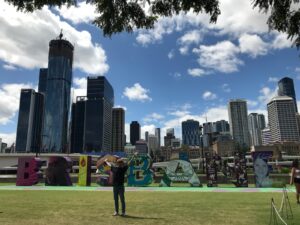
For the week after I flew to Australia, I was filled with the desire to go home right away. The first week was very long, with English that was much more difficult and fast than in class, an unfamiliar climate, unfamiliar food, and my feelings that could not be conveyed. Also, Australian English is a bit quirky and difficult to understand, and there was a Japanese person staying with me at the same homestay who was able to converse with his host family without any difficulty. I wondered why he could converse so fluently while I couldn't, and my frustration and impatience grew, which made me even more stressed.
From the second week, the content of my language training changed drastically. I was able to understand much better than in the first week, and I gradually got used to expressing my thoughts to others, even with my poor English. The reason for this is probably the easygoing nature of Australians. They do what they want to do without worrying about making mistakes, and they are very friendly. For example, they will even talk to complete strangers they meet in the supermarket and chat with them.
This was a scene that would never happen in Japan, but it helped me grow. Even if I fail, I can just try again and again, and if I talk to strangers, I can become acquainted with them. Once I realized this, language training became fun.
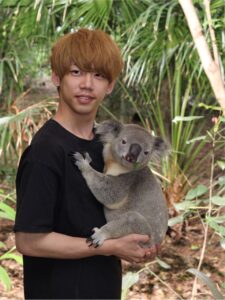
In the third week, I went to Brisbane, known as the third largest city in Australia, and was able to experience Australian people, culture, and life abroad, while also having fun. By the last week, I was able to understand the conversations better than on the first day, and I was able to express my feelings to the other person, so I was able to grow both mentally and linguistically.
After completing this language training in Australia, I think it was good that I went. I was able to spend a very meaningful time and grow both physically and mentally, and I was able to improve my language skills. At the same time, I also found my own issues. That was an overwhelming lack of knowledge. Due to my lack of knowledge of English, I was unable to say what I wanted to say, so I rephrased it in simple words and tried to communicate in a way that the other person could understand, but that was no good. First, I need to increase my vocabulary knowledge and be able to use those words. I also struggled with the words (slang) that are unique to each country, so I think it would be good if I could learn slang from each country. At the same time, in order to achieve my own goals, I would like to improve my past bests in Eiken and TOEIC, and achieve them one by one.
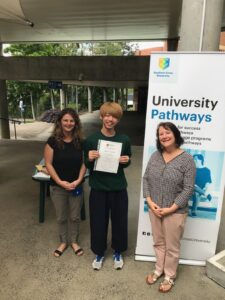
- Makoto Numazawa
- I participated in a one-month language training program in Lismore, Australia. My life in Australia was very rich and fulfilling.
It took a lot of courage for me, a student in the Department of Child Development, to participate in a language training program that was originally intended for students from the Department of International Linguistics. Although there were many difficulties when I actually participated, I felt that taking action based on the desire to "try" anything through this training would lead to improving my own human abilities.
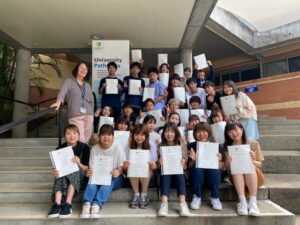
At Southern Cross University, I experienced the educational environment in another country and learned a lot. Many of the lessons were student-led, and we also made presentations using ICT. At the local university, all lessons were of course conducted in English, and at first I was not used to it and could not understand very well, but as I attended every day with enthusiasm, I gradually became able to understand and participate actively.
During my homestay, I was able to experience the differences between Japanese and Australian lifestyles through actual daily life. What particularly impressed me was how much time is valued for family time and the water issue in Australia.
In Lismore, where I was staying with my host family, the sun rises very early and the heat wakes me up at around 6am. Therefore, stores open relatively earlier than in Japan and people start to get active. The shops in town close at 17pm and it gets very quiet at night. My host mother told me that "it's because all the shopkeepers have the habit of eating dinner together with their families every day and talking about the day."
Childhood is an important time for people to build trusting relationships with their parents, which greatly influences their future personality development, but in today's Japan, there are many families where the trust and communication between family members is weakening due to both parents working. I felt that if Japan could adopt the Australian way of working and lifestyle, it would be a very good environment for children.
Another very serious issue was the water problem. Australia has a serious water shortage, and my host family, even though we had five people, was required to do laundry once a week, wash dishes once every two days, and shower for five minutes per person. All citizens, both adults and children, are working to conserve the environment, and I was reminded that their actions contribute to protecting the rich natural environment.
I also learned so many other things, too many to mention here, such as culture, history, and religion. It also gave me the opportunity to think more about Japan than ever before.
This time, I studied abroad in February and March during a time of great global change, but with a lot of help from the local people, the international students I studied with at Southern Cross University, and the people in the Department of International Languages, I was able to complete this study abroad program safely. I will never forget my gratitude to all the people who supported me and were involved in this language training, and I will continue to work hard to use what I learned to improve my own way of thinking, to see and think about things from many different angles, and to make the most of this study abroad experience for the future.

-
2018
Short-term language training
- Yui Haraguchi
- During my one month of studying abroad in Australia, I strongly felt the difference between Japanese universities and overseas. Japanese university students have classes almost from morning to night. However, at Southern Cross University, classes start at 1am and end at 9pm. There is a 3-2 minute morning tea time between the first and second period, a 10 minute lunch break at the end of the second period, and from 30:2pm there is a 50 minute self-study period (although some teachers continue classes). I was really envious of the Australian timetable.

I was also happy that the teachers at Southern Cross University were very supportive of the students. For the first two weeks or so, I struggled with speaking and listening. Not only was I unable to understand, but I also couldn't find the words or sentences I wanted to express, but the teachers would call out to me when I was at a loss for words. No matter how many times I asked them about something I didn't understand, they would explain it to me without a single frown. I was really saved by their kindness. Before studying abroad, I really hated speaking English in front of people. I was timid, thinking, "I'm embarrassed to speak English even though I'm not perfect," and "I'm afraid to show who I am, and I don't want to be rejected," but after studying abroad, my fear of speaking English in front of people has decreased. I'm sure that's because my teachers, friends, and host family praised me when I succeeded. I feel happy when I'm affirmed, and it makes me want to work harder. "When studying a language, don't be with people who criticize you." These are the words of two Japanese YouTubers who speak English and Korean fluently. I personally like them, but they both said similar things. It was only after I studied abroad that I understood the meaning of this phrase. And I decided to cherish the people who praise me.
Next, about the homestay. My homestay was the best. Every day was full of plans, and we went to many places such as the sea, the river, shopping, bookstores, local parks, theme parks, and we experienced a luxurious drive to Gold Coast for two weeks in a row. They picked us up and dropped us off at school every day, and taught us how to ride the bus. Since it was my first time abroad and my other roommate and I, my host family cooked dishes from various countries. After going out on the weekend, we became so close that we fell asleep while watching movies together. The most encouraging thing was that even though they were tired from work, they stayed up until I finished my assignments and helped me with the parts I didn't understand. I think it's thanks to my host family that I was able to improve my speaking, improve my vocabulary, and keep up with the assignments. They always spoke slowly, and when I asked them to repeat something, they corrected me in easy-to-understand words. I don't think it's easy to meet such a kind host family. I would like to meet them again and express my gratitude once again.
Finally, here are my future study plans. First, I feel that vocabulary is important whether it's talking to people or taking exams or obtaining qualifications, so I will increase the amount of vocabulary I have. Second, I feel that there are many parts of grammar that are unclear when conversing, so I will solidify the correct grammar by using a workbook. Third, I will not be afraid to use Skype in speaking classes.
As a result of studying abroad, the TOEIC score I got after returning to Japan exceeded my initial goal. I was worried that my score had only improved by about 1 points in the year and a half since I enrolled. That's why when I found out the results, I was so happy that I cried. Not only that, but it also gave me a desire to improve myself and see more of the world, so it was all a positive experience for me. I'm grateful for the valuable opportunity I was given while I was a student.
The seniors gave detailed information about their classes and university content, and I think there were many similarities with my experiences. I wanted to share my experiences, including some of the weaknesses that are not often discussed. Although studying abroad for only a month will come with some difficulties, it will definitely be a good experience, so please give it a try. I'm rooting for you!
- Kento Mikami
- I studied abroad at Southern Cross University in Lismore, New South Wales, Australia for one month from February 2nd to March 22rd this year. I decided that this would be my last study abroad as a student. I set three goals for this study abroad. First, as the leader of this study abroad in Australia, I wanted all five of us to work together and be able to proudly say that this study abroad experience was a very good experience for us. Second, I wanted to communicate with my host family and school teachers without being afraid of failure. Finally, the third goal was to improve my current listening and reading skills. I think I was able to achieve these goals without any regrets.
Regarding the first goal, I was able to keep in close contact with everyone, and we were able to get through without any major issues, so it was great that we were all able to return home safely. Regarding the second goal, I think I put the most effort into it. I was able to approach it with confidence and positivity, not only during school classes, but also in my daily life with my host family. I was able to communicate with students from other universities and international students I met locally, and it was a really good experience. Regarding the third goal, I would like to take the TOEIC or EIKEN test in the near future to see how much my level has improved.
Next, I would like to talk about my school classes. Basically, classes were held from 9:15 am to 12:13 pm from Monday to Friday. Afternoon classes ended around XNUMX:XNUMX pm, there was about an hour of lunch break, and afternoon classes started at XNUMX:XNUMX pm. The contents of the classes were Australian history, animals, geography, Aboriginal history, reading long texts and answering questions about them, and other applied problems. In addition to that, I chose a topic and gave a presentation about it. After school, I went to the bar at school and enjoyed playing table tennis and billiards while talking to the people there, so I think I had a meaningful time. On my days off, I went to the beach with my host family to swim together, or went to the shopping mall to shop. I ate delicious food every day and enjoyed board games every day.Finally, I think that this study abroad in Australia is my last study abroad in school life, and I think that I was able to apply all the knowledge I have cultivated so far in my classes. My future English goals are to improve my Eiken and TOEIC scores, and I would like to continue studying English hard and do my best until the end so that when I look back on my school life, I will have no regrets about my student life. I would also like to express my gratitude to everyone who was involved in this study abroad. Thank you very much.
-
2017
Short-term language training
- Hakufu Miho
- Before going to Australia to study abroad, I set two major goals for myself, and in just one month I have learned a great deal.
First of all, this study abroad trip was full of obstacles from the start. The flight I was supposed to board was canceled, and I wondered what to do, but I was able to board the previous flight that had been delayed. The more you panic, the more you have to stay calm. I also learned the importance of explaining the circumstances of my connecting flight and negotiating.
The daily flow at SCUcollege is fixed, and classes are conducted based on one theme each week. For example, the first week was "Personality". I learned an amazing number of adjectives in a week. I used the adjectives I learned to talk about my personality and to explain the people on the cards I was dealt. We often played games in the afternoon, and I spent a lot of time communicating with my classmates in English throughout the day. This was a really good opportunity for me, as I had difficulty expressing what I wanted to say and wanted to be able to converse more smoothly. At first I couldn't communicate well, but as time passed, after two or three weeks, I was able to communicate, albeit poorly. In classes at SCU, I always felt that my vocabulary was limited. This is something I need to work on in the future. I also felt that I was not very proactive. Once, when a fusion festival was held at SCU, an Australian student who was studying Japanese called out to me. He was speaking Japanese very hard and actively talking to other Japanese students. Although he is by no means perfect, he is someone who is constantly striving to improve his speaking ability, which is something I don't see as being like other people, and I think that is something to be admired and emulated.
My host mother was very kind. She cooked delicious meals for me every day and took me to various places on weekends. For example, on the first weekend, she took me to Byron Bay and Ballina. In Byron Bay, we went to the Byron Bay Lighthouse and the cape. The cape is located at the easternmost point of the Australian continent, and the sea that can be seen from there was emerald green and very beautiful. In Ballina, we went to the beach. The white sand and clear water were a beautiful sight, and we had a pleasant time thanks to the good weather. On other weekends, we went to Macadamia Castle to see koalas and kangaroos, and played with the children next door.
Due to historical background, British culture is strong in Australia, and we had tea time at school after coming home or after meals. Tea time at school was very meaningful as it allowed us to deepen our relationships with classmates and interact with students from other classes. Aboriginal dance was performed at Fusion Festival and Open Day, and we touched on this briefly in class, but Australians respect the culture and people of the indigenous Aboriginal people. In Japan, there seems to be little awareness of the existence of indigenous people, but there is an Ainu people in Hokkaido. I realized once again that it is important to know and cherish Ainu culture.
The town of Lismore has many hills, and I had to go up and down hills wherever I went. There are also only two traffic lights in the town, and most intersections are small roundabouts. It gets crowded around the shopping center on weekends, but I found it strange that the intersections are hardly ever clogged. Related to this, I was impressed by the number of Japanese cars. My host mother also drives a Toyota, and my neighbor's car is a Honda.
Through this study abroad, I was able to discover many of my strengths and weaknesses, learn how to further develop my strengths, and how to overcome and improve my weaknesses, and spend a short but fulfilling month. I would like to express my gratitude to everyone I met and everyone who was involved in this study abroad program. Thank you very much. I will make use of this experience in my classes in the second semester.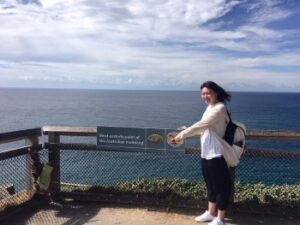
-
2016
Short-term language training
- Tsubosaka Chiju
- I studied abroad at Southern Cross University in Australia. It was my first time studying abroad, so I had a lot of problems, but it was a great experience.
University life was very different from Japanese universities. There was a long break before lunch, we could make tea or coffee as we wanted, there was free lunch, and so I felt there was more freedom than in Japan. In classes, we also learned basic grammar and sentences that can be used in daily life. I was also able to study areas that I was weak at, which was very helpful in overcoming my weaknesses. There was a lot of teamwork, and the many opportunities to speak in English were also very good experiences.
Outside of university life, I was able to learn everyday conversation and also learn about Australian history and culture by talking a lot with my host family. I was able to understand Australian living conditions more deeply by helping with household chores, such as cooking together. I learned that water is precious in Australia and that many people use it sparingly, which made me realize once again how easy it is to live in Japan. I also noticed that Australians value their own and their family's time very much, finishing work early and going home to spend more time with their family and on their hobbies. I think this is a very good habit, so I would like to incorporate it into my own life.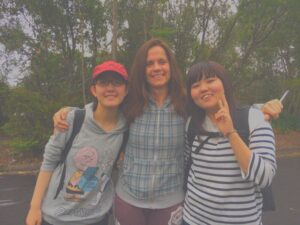
On the weekends, my host family took me to popular Australian beaches, amusement parks, and downtown areas, and I was able to have many unique Australian experiences.
Most Australians are very friendly, so wherever I went I was able to interact with many people. The sea, which I couldn't easily go to where I live in Japan, was relatively close to where I was staying, so I was able to visit it frequently, which became a fond memory for me.
In my future studies in Japan, I would like to make use of the many things I learned in Australia and work hard every day. My classmates in Australia were very serious, hardworking, and proactive, so I would like to follow their example. While living in Australia, there were many times when I was unable to properly convey what I wanted to say. I would like to turn this disappointment into enthusiasm for studying. I would like to study harder and put in more effort at a Japanese university than before I studied abroad. If possible, I would like to study abroad again, so I would like to further improve my abilities until then. I think this study abroad experience was the best experience because it increased my enthusiasm for studying, made more friends, and improved my communication skills. I was able to study abroad thanks to the support of my parents, the people at the university, my host family, and many other people. I would like to always keep this gratitude in mind as I spend my future school life.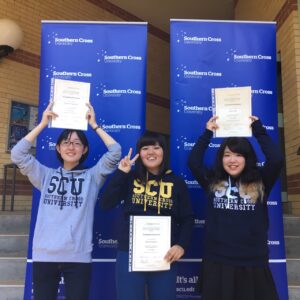
New Zealand
Christchurch Institute of Technology
-
2018
Short-term language training
- Nguyen Thi Hoang Giang
- I studied abroad in Timaru, New Zealand from February 2018th to March 2th, 12.
All of the students studying abroad, including myself, took a placement test on the first day. During the first week, I took classes with a group from Kitakyushu. In the morning, we learned English by introducing ourselves in English and playing games. In the afternoon, we did outdoor activities, mainly at museums and botanical gardens, where we learned about New Zealand's history, culture, and the distribution of New Zealand plants. From the second week, full-scale classes began. I was supposed to study in the same class as the Japanese international students, but when we were being divided into classes, the teacher invited me to join the Intensive English Class, and as it was a rare opportunity, I decided to study in that class.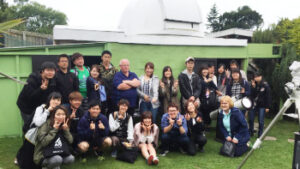
Intensive English Class is a class for studying academic English. I strengthened four skills (reading, writing, listening, and speaking) every day. In reading, I read local news and newspapers to review writing materials and tenses. In addition, to improve my reading speed, I received a reading comprehension handout on the theme of globalization once every 2-3 days and solved the problems while timing myself. By repeating this, I improved my reading comprehension. In writing, I practiced how to write academic essays using handouts given by the teacher. I had my teacher correct the essays given as homework and rewrote them every day to improve my writing skills. In addition, I learned academic terms using the AWL (Academic Word List) website on the Internet. In listening, I listened to TED videos and news broadcast on TV, took notes on the main ideas, and shared them with the class. If there was something I didn't understand or a word I couldn't hear, we discussed it together or asked the teacher to teach me. Once a week, I watched a TED video that I was interested in, summarized the content, and presented it in class. It helped me practice not only my listening but also my speaking, allowing me to study efficiently.
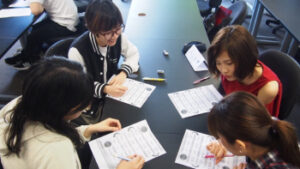
I was able to study many things in New Zealand, and of course I learned English, but I also learned about New Zealand's history, culture, and natural environment. I would like to share the experiences I gained from this study abroad experience with people who are thinking about studying abroad in New Zealand, use it as a learning experience to understand different cultures, and use it to deepen friendly relations between Eniwa City and New Zealand. To that end, in addition to obtaining English qualifications such as TOEFL and IELTS, I will study with the goal of passing the Japanese Language Proficiency Test and the Korean Language Proficiency Test.
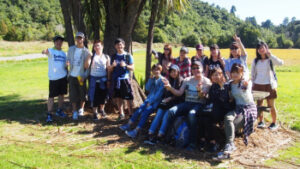
- Maui Kurosawa
- After completing the language training in New Zealand, my future study methods and attitude towards English have changed, and I was able to have a good experience. After a month of language training at Christchurch Polytechnic University, my listening and thinking skills improved as I studied English at the university, which is in a completely different environment from Japan. In the first week, I realized how inadequate my English was, and how I lacked the ability to improvise and respond in English during a conversation. I couldn't understand my host family's English, and even having a conversation was difficult. However, when I spoke to them, I would think deeply about each word and what they were saying, so in order to avoid doing that, I would listen to a sentence, think about what they were saying, and then respond, which gradually helped me to have a conversation.
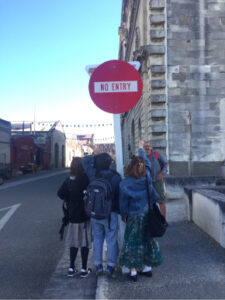
In Timaru, New Zealand, the speed of English is relatively slow, and it is easier to understand than in other areas, so by the second week I was able to understand more than 50% of what was said. At university, English conversation was advanced, so there were many things I couldn't understand, but it was important to speak up in class, so I was motivated to speak up. In addition, when we had discussions on the topic of desertification in class, there were students from other countries, so we were able to share the problems of other countries and gain new knowledge, and we were able to study environmental issues in English and learn advanced content. Being with students from other countries meant that we knew how difficult it is to speak a language other than our native language, so we were able to compete with each other, stimulate each other in our studies, and interact with each other. I began to talk often with my seniors from the same university, and by speaking in English, I was able to improve my everyday conversations and speaking up in class. By the third week, I was able to reliably understand more than 70% of the content of the conversation, and I was able to respond more clearly than before. I also started to talk often with my host family, and we were able to make friends and have lively conversations, and I clearly realized that my listening ability had changed from before. This language training led me to make many valuable encounters and helped me to grow greatly in my English studies.
My future goals and awareness of my studies at Hokkaido Bunkyo University are to put effort into improving my English skills outside of class and to participate in extracurricular activities. I will make an effort to speak up in class and demonstrate my English skills, and I will also make an effort to study what is necessary at the moment. I want to put effort into extracurricular activities and use them to work overseas in the future. I plan to mainly visit developing countries and participate in tours including volunteer activities to help people, gain a lot of experience, and study hard. I will treasure my time from now on, not forget what I have gained from this study abroad experience, and from my second year onwards, I want to enrich my student life and become a promising person for the future.


-
2017
Short-term language training
- Teruhisa Okabayashi
- I studied abroad in Timaru, New Zealand for about four weeks from February 2th to March 11th. I studied in the English Language and Activities Programme at the local university, Ara Institute of Canterbury.
My goals for this study abroad were: 1) to improve the accuracy and speed of comprehension in listening and reading, 2) to approach classes and life with my host family with a positive attitude without fear of failure, and 3) to understand everyone's actions and support them without being too excessive, as I am the oldest member of the group, and to strive to improve teamwork. I feel that I was able to achieve these goals without any regrets. Regarding 1, I would like to check in the near future how much I was able to improve my current TOEIC score. Regarding 2, I think that is what I put the most effort into. I was able to approach it with confidence and positivity, not only during school classes, but also in my daily life with my host family. Regarding 3, I was able to manage it by not neglecting to communicate well with everyone. And above all, I am most happy that we were all able to return home safely together. As mentioned above, I feel that I not only achieved my personal goals, but also achieved even greater results.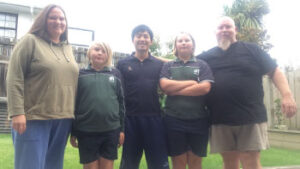
Next, I'd like to tell you about life there. I attended classes at school from Monday to Friday, and spent Saturdays and Sundays with my host family. Classes were divided into two parts, morning and afternoon, and in the morning we focused on improving our English skills, such as grammar, reading, and speaking. In the afternoon, we learned about New Zealand culture and people, played sports as an activity, and visited tourist spots to do fieldwork. Every day was fulfilling, and I think it was the best program. Not only did I gain a lot of confidence in my English in class, but I also learned a lot about New Zealand.
I was also able to have many valuable experiences. I will talk about a few of them. The first was interpreting the speech of the Mayor of Eniwa at the ceremony to commemorate the 10th anniversary of the sister city agreement between Eniwa City and Timaru. I was very nervous because I was in front of a large audience, including Timaru City Council members and people from Eniwa City, but I worked hard together with the other members and performed my role well. I still remember that moment vividly. It was a moment when I realized that I had accomplished something great and gained a lot of confidence. The second was visiting a local elementary school and teaching Japanese. Since I am aiming to become an educator, this was a great experience for me. My group taught a lesson on Japanese characters. Of course I was nervous, but I was most happy that I was able to conduct the lesson with confidence and teach the children many Japanese words. The children were very proactive and asked me many questions. The children's sparkling eyes and smiles at that time are memories I will never forget. At the same time, I deeply felt how happy I would be if I could do such a job in the future.
This was my last chance to study abroad in my university life. Therefore, I was able to take it more seriously than ever before, with deep emotions. From now on, I would like to utilize what I learned this time and focus on improving my English skills. My specific goal is to achieve a TOEIC score of 860 and EIKEN Grade Pre-XNUMX by the end of the year. This study abroad experience made me strongly visualize my dream of "going abroad again in the future, studying education and tourism in English, and working overseas." I would like to take my time and work hard to prepare for this.
I gained so much from these four weeks, and the word "fulfilling" is not enough to describe how wonderful it was. I would like to make the most of what I have learned here and do my best to get through the rest of my time at university.
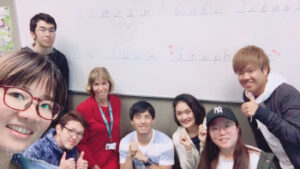

- Takumi Yamaguchi
- I studied abroad for four weeks at the Ara Institute of Canterbury University in Timaru, New Zealand.
In addition to basic grammar and listening, I was able to learn about New Zealand history and culture, as well as the similarities and differences between Japan and New Zealand. I found the Maori culture particularly interesting. As I learned about Maori culture, I realized that it was very similar to the Ainu culture in Japan. At a museum near the university, Maori traditional costumes and hunting weapons were on display, which were very similar to those used by the Ainu. From that point of view, I realized that there is a strong connection between Japan and New Zealand.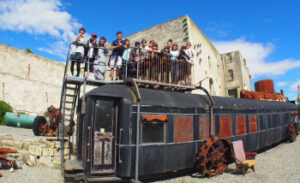
Since I was a homestay student, I naturally had to communicate in English. Since I entered Hokkaido Bunkyo University, I had more opportunities to speak English, and it was not my first time communicating in English, but I was not confident in my English. Therefore, I was nervous every time I talked to my host mother. However, my host mother was very kind, and she corrected me when I made mistakes in English and also listened to me about various topics. Thanks to that, I gradually became less nervous. As the day of my return home drew near, my host mother said to me, "Your English has improved a lot since you started your homestay." I was very happy and gave a fist pump in my heart. At that moment, I was able to gain confidence in my English for the first time and learn how to communicate.
I feel that this study abroad experience was an important turning point for me. Before I went abroad, I had low motivation to learn English. However, the people I met, the things I learned, and the experience of living abroad all increased my motivation to learn English. In the future, I would like to work in a profession where I can use English to help people, such as an English teacher. I would also like to return to New Zealand someday and continue my studies. To achieve this, I would like to spend the remaining half of my school life meaningfully and continue my studies.
Chugoku
Jilin University of Finance and Economics
-
2017
Exchange student
- Shinpei Igarashi
- I studied abroad at Jilin University of Finance and Economics in China for about a year. Although it was only a year, I gained a lot from it. I would like to honestly share what I experienced and felt during this year of studying abroad.

When I first started studying abroad, I was really anxious. While the students from other countries spoke Chinese very fluently, I tried desperately to converse with them in Chinese, but I couldn't find the words to say and couldn't start a conversation myself. Then, I met a very cheerful Korean person who was trying to communicate in Chinese proactively without worrying about grammatical mistakes.
Seeing that, I felt very sorry for myself for being so passive, afraid of making mistakes. After that encounter, I started to proactively talk to other international students and go out and communicate with many Chinese students. Then, I naturally made many friends and started going out to eat and traveling with them. Before I knew it, the anxiety I had felt at the beginning had disappeared, and I even started to feel like I didn't want to go back to Japan.
In class, I studied Chinese together with Korean and Russian international students. Of course, the teacher taught all the classes in Chinese, so at first I had a hard time keeping up with the class. Most of the time the 90-minute class ended without me understanding anything the teacher was saying, so after class my classmates helped me with revision material and homework. In addition to Chinese language classes, I often attended classes with Chinese students together with other international students, and was able to make friends with many Chinese people there. I also attended Japanese classes with students from the Japanese language department, and conversed with them in both Japanese and Chinese.
The number of classes was relatively small, and outside of class time I would go out with friends or study in the library. In the first semester, I often studied in the library after class, but the Chinese students and other international students were very friendly and would invite me out whenever they had free time. Especially in the second semester, I had more time for classes and went out most of the time. There were many worlds outside of my home that I didn't know about, and it was a very stimulating study abroad experience.This time, I studied abroad in China with the goal of being able to speak Chinese. It's true that I was able to improve my Chinese language skills and deepen my understanding of Chinese culture, but I think the most valuable thing I gained from this study abroad experience was being able to make friends with people from many countries. From now on, I will have many opportunities to interact with Chinese people in Japan, so I hope to make use of this experience to actively interact with them, improve my Chinese language skills, and grow as a person.
I am very grateful to all the people I met in China.
- Yuri Kanazawa
- I am majoring in Chinese in the Department of International Languages, Faculty of Foreign Languages. While taking Chinese language classes at Hokkaido Bunkyo University, I learned that I could study abroad at Jilin University of Finance and Economics. There are two main reasons why I decided to study abroad. First, I thought that I would be able to naturally learn correct pronunciation by communicating with local Chinese people on a daily basis. Secondly, I wanted to experience the cultural differences between Japan and China while actually living there.

When I actually went abroad to study, I had both hopes and fears: would I be able to keep up with the lectures? Would there be Japanese people at my destination? Would I be able to interact with and make friends with local Chinese people and international students from other countries? When I started studying abroad in March, there was not a single Japanese international student at my school, so I was nervous every day for the first month.
In Japanese lectures, the teacher explains Chinese in detail in Japanese, but in Chinese lectures, everything is explained in Chinese, so I had to prepare and review on my own to keep up with the lectures, such as the speaking speed and understanding the content, which was very difficult. However, thanks to the teacher's enthusiastic guidance and interactions with international students and local students from other countries, my ears gradually got used to it, and little by little I was able to understand the speaking speed and meaning of words. Before I knew it, my days of tension had changed to fun and fulfilling days.
As I got used to life in China, I began to see my own challenge. That was, "Use Chinese to communicate more." When I first arrived in China, I thought it was embarrassing to make a mistake in the language, so I was not able to actively communicate with local Chinese people. I also couldn't speak Chinese fluently, so I couldn't speak with confidence. However, I thought that by challenging myself to communicate actively every day without being afraid of making mistakes, I would be able to improve my vocabulary for Chinese communication, so I lived with this in mind. By doing so, I was able to talk to many people, and I also had more opportunities to interact with friends.Through this study abroad experience, I was able to reconsider the joy of learning a language in China, my way of thinking, and my own naivety. Also, by experiencing Chinese culture, I came to like China even more. I had the opportunity to travel around China with a Korean exchange student, and the scenery and historical buildings I saw there were very fascinating, with shapes and colors that are not found in Japan. In the future, I would like to work hard to improve my academic ability and vocabulary through lectures at university and self-study at home.
And the biggest thing I gained from this experience is that I now have a clear goal of working at a travel agency in the future, where I can utilize what I learned during my study abroad. I will now prepare for my job hunting period, which begins in March of this year. I encountered many difficulties during this study abroad experience, but I was able to live comfortably thanks to the support of my teachers and friends. I am very grateful to my teachers, the local Chinese students, and the international students from other countries.


- Shota Miyabayashi
- I studied as an exchange student at Jilin University of Finance and Economics in Changchun, Jilin Province, China for about a year from August 8 to July 7. Before entering university, I knew no Chinese other than "你好" and "再见". Also, when I first entered university, I had no thought about studying abroad at all, and just took Chinese classes. Then, in the first semester of my second year, I thought, "It might not be a bad idea to study English with Chinese students while studying Chinese," and decided to study abroad in China.

First, let me look back on my studies. In the first semester (August 8 to January 1), I studied Chinese with Korean and Russian international students, and in the second semester (March 3 to July 7), I studied English with Chinese students. Even though I studied English, I naturally had to communicate with the Chinese students in Chinese. Depending on the subject, the study content was in English, but the teacher's explanations were in Chinese, so it was not easy to fully understand the lecture content. However, by studying with the Chinese students, I was able to directly understand Chinese culture and ways of thinking.
Next, about daily life. Before studying abroad, the thing I was most worried about was food. Whatever you do, it is essential to be healthy. Therefore, I was very worried about whether Chinese food would suit my body. I basically had lunch and dinner at restaurants around the university. And when the weather was bad, I used delivery services. Fortunately, I never had stomach pains that required medicine or caught a cold. In actual life, the most convenient thing I felt was that I could pay using WeChat Payment and Alipay. Electronic payments can be made not only at large supermarkets and fast food restaurants, but also at small shops, street vendors, and food stalls. Also, at some restaurants, you can use an app to order and pay. On the other hand, there were some things that I naturally felt were inconvenient. However, they did not seem to be a major obstacle to studying abroad. On weekends, I took the bus and subway to walk around the parks in Changchun and even visited museums. During three-day weekends and other long holidays, I used trains and bullet trains to tour China, visiting places like Beijing, Shenyang, Tianjin, and Dalian.
Before studying abroad, I was unsure about the idea of studying English at a Chinese university. However, over the past year, I have been able to learn things that you would never learn by studying from a textbook, as well as the current state of affairs in China. Even if I no longer study Chinese in my university classes, I would like to make use of my experience studying abroad in China.
What you need to study abroad: courage and guts
What you need when studying abroad: “Courage and courage”
Things necessary to study abroad; “Courage and Bravery”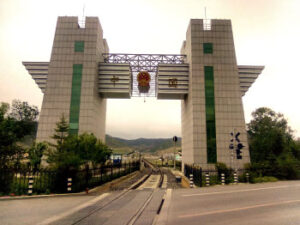

-
2016
Exchange student
- Ryusei Kuchino
- Hello everyone. I am a student of the International Linguistics Department who recently completed my study abroad at Jilin University of Finance and Economics. I studied Chinese at Jilin University of Finance and Economics in Jilin Province, China for about 10 months from March 2016 to January 2017. I returned to Japan on January 19, 2017, and traveled for about a week with a Chinese friend I had made before returning to Japan, visiting Beijing and my friend's hometown of Wuxi.

Now, Jilin Province, where I stayed this time, is located in the northeastern region of China, and it takes about 10 hours to get there by sleeper train from the capital Beijing. It is also a place where the Japanese army invaded during the war, and it has a deep history with Japan. As for the climate, it is very hot in the summer and can drop to minus 20 degrees in the winter.
The main dialect spoken in this area is Dongbei (northeastern dialect), but in reality it is not that different from Mandarin (standard language), and to Chinese people it sounds a bit ridiculous.
By the way, I studied Chinese in Jilin Province for about 10 months, but I was really a beginner when it came to studying Chinese. What prompted me to study abroad was when I saw a notice about studying abroad in China on a bulletin board during the second semester of my first year of university. Since Chinese was my main language at the time, I thought this was a good opportunity and immediately decided to study abroad in China.
So on March 4, 2016, I left for China, but on the plane to Changchun (the capital of Jilin Province), I immediately experienced an unexpected culture shock. I boarded the plane safely, and when I tried to find my seat and sit down, it was already taken. This kind of thing is rare in Japan. In fact, there were many other culture shocks I experienced.
That being said, Chinese people are really kind if you become friends with them. In fact, when I was in China, I became friends with the old lady who ran the tea shop in the restaurant, and we often talked together to practice conversation. Also, the old lady who ran the bakery often gave me free milk and sweets with every loaf of bread I bought.As for my studies, after I arrived in China and took a class-based test, I started in an intermediate class. My classmates were Korean and Russian. The classes mainly consisted of four parts: reading comprehension, composition, conversation, and listening. There weren't many Chinese classes, so I often went to the library after class to study on my own. In the second semester, I entered an advanced class, and when I had become somewhat accustomed to Chinese, I studied by watching dramas and frequently went out with Chinese friends to test my conversation skills.
As for my future study plans, I plan to actively interact with Chinese students from next semester so that I don't lose the Chinese language skills I have acquired through studying abroad. I also want to try various Chinese language proficiency tests. There are many other things I would like to write about, but I can't write everything here, so I have given a brief introduction. If you are a student interested in China, why not try studying abroad and experience it for yourself?
-
2015
Exchange student
- Hanako Watanabe
- From March 2015 to July 3, I studied at Jilin University of Finance and Economics as an exchange student at Hokkaido Bunkyo University in order to deepen my understanding of Chinese.
1. Learning aspects
During class, I made it a point to be the first to make a presentation, and I also put a lot of effort into preparation and review, and read aloud from the textbook.
When I was with Chinese people, I didn't speak Japanese. Instead, I recorded any words I didn't understand when messaging with friends or going out to eat, and repeated them every day to memorize them. When I went to karaoke, I memorized the Chinese songs my friends sang, and spent every day immersed in China.
Before studying abroad, I took the Chinese Language Examination HSK Level 249 and scored over 300%, but now I have a score of XNUMX points (out of XNUMX) for HSK Level XNUMX. If my only goal was to get a high score on HSK Level XNUMX, a year and a half would be enough, but what I wanted from studying abroad was to get something that I could only get in China. Being able to respond immediately when Japanese movies or celebrities are mentioned in Chinese makes communication smoother. China is also full of information that is hard to hear in Japan, such as popular phrases, colloquialisms, and dialects.I believe that gaining these things that cannot be measured by tests alone is the greatest benefit of studying abroad.
2. Lifestyle
In Japan, the impression of China and Chinese people is not very good. I was worried about whether they would accept me because I knew them from TV, newspapers, and the Internet, and also because the city where I was, Changchun, was under Japanese control during the war. However, as soon as I arrived in China, my worries disappeared. Shortly after arriving in China, I needed to go shopping for daily necessities, and my Chinese friends from the Japanese language department helped me. I will never forget that five of them walked a long way with me, carrying in both hands all the luggage I could not carry by myself.
In their everyday lives, they are passionate and generous enough to welcome outsiders.
Japan is an island nation separated from its neighboring countries by the sea, and has fewer ethnic minorities than China, so there are not many people with these kinds of personalities. I found this very refreshing and thought that I should learn from their personalities.
3. Psychological
During my time abroad, I not only studied and interacted with friends, but also participated in various activities. One thing I particularly remember is the "Chinese Bridge," a play introducing cities in Jilin Province to local junior high school students and international students. Through the live Chinese of the junior high school students, I was keenly aware of the low level of my Chinese. However, I tried my best at the time and danced a Chinese dance. Everyone has things they can't do, but how they act in those situations can change how others perceive them, and if they make an effort, they can move in a better direction. In the past, I was the type of person who would worry about bad things, but now I don't do that, and if I look for things I can do and put them into action, I can think and act to move forward. I think this growth is a great harvest.
XNUMX.in conclusion
Finally, I would like to thank my Chinese friends, teachers, international students, and professors at Hokkaido Bunkyo University.
-
2012
Exchange student
- Yuki Yoshida
- I studied at Jilin University of Finance and Economics in Changchun, Jilin Province, China as an exchange student for a year and a half from August 2012 to around January 8. Normally, Hokkaido Bunkyo University's exchange program lasts for one year, and it is unusual to extend it for six months, but after applying for an extension at the recommendation of a Japanese professor at Jilin University of Finance and Economics, I was able to continue my exchange program thanks to the arrangements made by the professors at Hokkaido Bunkyo University and Jilin University of Finance and Economics.
In August 2012, I arrived in China and first moved to an empty room in a dormitory where Chinese students from the Tax School at Jilin University of Finance and Economics lived, and that's where my life in China began. My roommate at that time was a Japanese friend who came to study abroad with me from Hokkaido Bunkyo University. However, I was not happy that my roommate was Japanese, so I immediately asked my teacher if I could live with a Chinese student. After that, it took quite a while to complete all the preparations, such as the moving procedures, so during that time I made an effort to actively find Chinese people and speak Chinese to them. Among them, what had a big impact on my improvement in Chinese was my encounter with the dormitory manager. At first, I could hardly speak Chinese, so I asked the manager, "Teach me Chinese," while looking up words using an electronic dictionary, and the manager was happy to oblige. After that, whenever I had free time, I visited the manager almost every day to practice my Chinese. After a while, when I was ready to move, I moved to the dormitory of the Foreign Language School and lived with three Chinese students who were studying Korean. Furthermore, there were many students studying Japanese in the dormitory, and through them I got to know many Chinese students. I think that living here was most helpful in improving my Chinese.
As for my school classes, I started in the beginner's class. The content of the classes was a little easy, so I put my energy into studying outside of class when I had time. When I didn't have classes, I would proactively invite my Chinese friends to chat with me, go out to play, and read Chinese newspapers and magazines in my room. In addition, during winter break, I stayed with a friend in Shenyang for about a month, enjoying local travel and interacting with the host family. This homestay must have improved my Chinese language ability, because after the winter break, I was able to skip the intermediate class and take classes in the advanced class.
During our first summer in China, we international students participated in the athletic meet, the biggest event at Jilin University of Finance and Economics, in which students from all departments participate. There are very few international students at Jilin University of Finance and Economics, only about 30 in total, so we participated in the competitions together with foreign and local teachers and worked up a sweat. It was a great event with a lot of international exchange.
When I finished my one year of study abroad and entered my second autumn in China, the atmosphere of the university had changed a little. Autumn is the entrance season in China, so at this time of year the campus became even more lively with many new students. In addition, a new dormitory for foreign teachers and international students was built on campus. A foreign affairs office was also established within it, and it became very convenient because it became possible to carry out procedures related to studying abroad and apply for the HSK without leaving the dormitory. In addition, training machines, kitchens, and washing machines were newly installed in the dormitory, and each room had a toilet and shower, so the living environment was improved. Originally, the dormitory's accommodation fee would have been 1 yuan per month if I had studied abroad at my own expense, but since I was able to extend my exchange study abroad, I did not have to pay the accommodation fee. However, even though there was such a wonderful dormitory, I applied for it myself and moved to a dormitory where Chinese students live in order to study Chinese. The living environment is inferior to that of the international student dormitory, but I think it is the best study environment. Last semester, I had already experienced living with Chinese students from the Department of Foreign Language Studies, and I could have continued to live in that dormitory, but this time I wanted something new and stayed in a Chinese dormitory from a different department. However, soon after moving in, I stopped talking to my roommate because we didn't get along, and I spent my time alone in my room reading Chinese books in silence. I felt a little lonely because there was less understanding of foreigners than the previous students from the Department of Foreign Language Studies. So when I wanted to talk to Chinese people, I would invite friends I had met during my year of studying abroad to go out and eat meals together in the cafeteria.
This semester, I wanted to start something new besides Chinese classes, so I took two specialized classes with Chinese students. One was international trade, and the other was macroeconomics. In both classes, I struggled at first because the teacher spoke very fast and every word was technical. However, my ears gradually got used to the speed and my vocabulary gradually increased, so I was able to understand about 7% of the class. However, there were many parts of the trade and economics classes that I had never studied before that were difficult to understand. So I thought it would be nice to study some other specialized knowledge in addition to Chinese in the future.
Now that I have completed all my studies, I think that Jilin University of Finance and Economics is the best school for studying standard Chinese because it does not charge tuition or accommodation fees and is located in the north. I think that the year and a half I spent at this school has helped me grow a lot. I will continue to study Chinese in the future and will definitely master it.
Xi'an International Studies University
-
2016
Exchange student
- Tatsuya Yamaguchi
- 1. What did you gain from studying abroad for 10 months?
For about 2016 months from September 9 to July 2017, I studied Chinese at the School of Chinese Studies at Xi'an International Studies University in Xi'an, Shaanxi Province, China. This was my first time traveling abroad and studying abroad in Xi'an. I had studied Chinese in Japan for about a year and a half before studying abroad, but I felt that interacting with native Chinese speakers in China was the best way to improve my Chinese language skills. Also, since Japanese is hardly spoken in China, I had no choice but to use Chinese in my daily life as a student, and I was able to feel my Chinese language skills improving every day. Naturally, at the beginning of my study abroad, there were many times when I couldn't keep up with the speed at which native speakers spoke Chinese, or when I couldn't express what I wanted to say in Chinese, and I was at a loss as to how to say it. However, as the days went by, I was able to gradually reduce such situations.

One of the reasons I wanted to study abroad in China was to improve my Chinese language skills. By studying abroad in China, I would not only be using Chinese more frequently than if I lived in Japan, but I also thought that I would definitely be able to improve my Chinese more than if I studied in Japan, since the environment would be one in which Japanese is not spoken. Now that my study abroad has ended and I have returned to Japan, I can say that my Chinese language skills have definitely improved compared to before I studied abroad. Another of my goals was to deepen my understanding of China as a Chinese language learner, and I think that by living in Xi'an and interacting with many local people and being exposed to various Chinese cultures, I was able to deepen my understanding even further. I placed myself in an unfamiliar place that I had never been to before, and it was an environment in which I could not rely on anything, so I think that studying abroad in China and learning Chinese was a very good choice in that respect as well.
2. How will you use the experience you gained from studying abroad in the future?
Today, the relationship between Japan and China is not good. Before I went to China, people around me were worried about the security situation in China. However, during the 10 months I studied abroad, I never felt that it was dangerous for me, a Japanese person, to live in China, and I never met any Chinese people with anti-Japanese sentiment. On the other hand, I heard from a friend that he had been treated badly just because he was Japanese. Only once during my 10 months of studying abroad did a Chinese man tell me that he had no good image of Japan or Japanese people. However, he said that his way of thinking changed after actually talking and interacting with me, a Japanese person. In fact, there are many people in both Japan and China who hate or have a bad image of each other's country. However, I think that these feelings of many people are probably born from biased information provided by history classes at school, news, and media, without being able to fully understand the other country and its people. The news and other information about China provided by the Japanese media often focuses on China's weak points and not-so-good issues, and there seems to be very little information that leaves a good impression of China. Therefore, information on the positive aspects is only shared by a small number of people who are interested, and unless people actively try to learn about it, many people end up understanding each other's countries with only limited information. In light of these incidents, I, as someone who is fluent in Chinese, will consider how to help the people of both Japan and China to understand each other's countries and their people more accurately than ever before, and how to alleviate the antipathy and dislike toward each other's countries. During my study abroad, I interacted with students from many countries other than China, and realized firsthand that there are a wide variety of ways of thinking, so I will tackle the issue of how to utilize this experience in future international exchanges.


-
2015
Exchange student
- Katsutaya Morozumi
- When I first arrived in China, I had no idea which way to go. There were many things I didn't know, from how to converse in Chinese to the fact that we drove on the right side of the road. I had studied Chinese for two years in Japan, but most of it was reading and writing, and I was nowhere near the level where I could actually converse in Chinese. Then, I suddenly decided to study abroad in China. No matter how carefree I am, I arrived in Xi'an thinking, "This is bad..."
When I arrived at the university, I was guided to the hotel that was being used as a dormitory. Then, I immediately ran into a problem. I couldn't understand what the hotel receptionist was saying. It seemed like they didn't understand what I was trying to say either, so I asked them to write it down on a piece of paper, and finally, I was able to communicate with them. I was asked to repeat myself many times, and I was about to give up, but I finished the conversation and headed to my room. I had applied for a double room in advance, so I was looking for the room, wondering how big it was, when three men came out of one room. When I asked them about my room in my poor English, they said, "We're roommates!" When I introduced myself, I found out that there were two Americans and one Mexican. I thought to myself, "This isn't a double room," and "I can't speak English...," but I started my life in a four-person room full of anxiety.
But in conclusion, I am really glad that I met these three people.
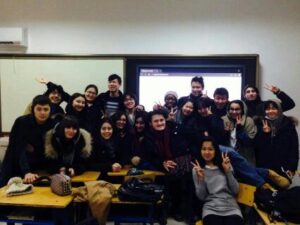
They understood that I couldn't speak Chinese well, and when I was confused about what to say, or when I was searching Chinese or English in the dictionary, they helped me think about what I wanted to say, or waited patiently for me to form sentences in my head. They were very considerate. Soon after I started studying abroad in China, I couldn't express my intentions to others, and I couldn't hear what they were saying, so I was anxious as a chatty person. However, I continued to force myself to talk to my roommates (and I'm grateful to my roommates for putting up with it patiently), and I was able to spend the whole day using only Chinese, which I think was a big factor in helping me develop the ability to "speak" Chinese.
In my case, it took me one or two months to get used to Chinese. I was able to converse and laugh with my friends without any problems, even though I had trouble expressing myself or making comments at first. It made me very happy, and it motivated me to study Chinese.
In terms of this environment, I think I was very blessed. My American and Mexican roommates, as well as the other foreigners, were very kind to me. I made many foreign friends by drinking with them and going out. After returning home, my American roommate and I even went on a trip to Korea to visit the friends I had met through this study abroad program, so their presence was very important to me.
My classmates in class were all good friends. They spoke slowly to me, and explained to me what the teacher was saying, even though I could write Chinese but couldn't speak it. They helped me a lot. I also think that the environment where I could interact with Chinese students who were learning Japanese was a great help in practicing conversation.
Living in China and interacting with many friends has not only improved my Chinese, but also exposed me to many cultures, customs, and ways of thinking that I had never experienced before. At the very beginning, I found it strange, but once I was able to communicate in Chinese, I began to find it interesting.
I think this change in values is very important to me. I also learned the importance of not judging people's nationality, culture, or way of thinking in a stereotypical way, but of judging them based on what I see, hear, feel, and think for myself.
When I first met my roommate, I tried to use my poor English, but now I would ask him questions in Chinese without hesitation. I think this change is the result of my study abroad experience.
Liaoning Normal University
-
2012
Government-sponsored study abroad
- Sae Makino
- I studied abroad at Liaoning Normal University in Dalian, Liaoning Province for about 2012 months from September 9 to July 2013. I think I was able to have many valuable experiences that I would not have been able to have if I had lived in Japan.
First of all, on the first day I arrived in China, I was supposed to have a professor from my university come to the airport, but no one came even after waiting for hours, so I ended up taking a black taxi, which is an unofficial taxi, to the school. Before going to China, I was told not to take such taxis, so I got in with the determination to die, and I safely arrived at the university. In addition, my visa was a work visa instead of a student visa, my health certificate had expired, so I had to go to the hospital by myself to get examined, and the first week was full of mishaps, and it was very difficult because I barely understood Chinese. However, thanks to this experience, I gained a little courage and was able to spend most of my time comfortably without worrying about anything. The dormitory was also much cleaner than I had imagined, and I was able to live there with almost no inconvenience. If I had to say one thing, it was inconvenient that there were frequent water outages. My roommates were Mongolian, Russian, and Korean, and I realized that life is completely different when the culture is different. Mongolian and Russian people are just loud, and Koreans hardly clean, but apart from these, I felt the different cultures were fresh and I was able to live together very happily. Everyone was very kind to me; they cooked for me, went shopping with me, and talked to me.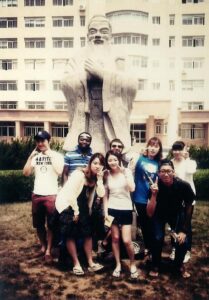
Classes are held every morning from 8:11 to 35:4, with elective classes in the afternoon. There are four classes: general, oral, listening, and reading. There are about 20 students in each class, mostly Japanese and Korean. Elective classes include Chinese language classes such as grammar and speech, as well as erhu, tai chi, and watching Chinese movies. There are also many school events, such as city tours, sports days, walking competitions, cherry picking, and karaoke competitions, which are held about once a month. All events are free to participate in, so many students participate. In addition, each student is given 1 yuan for activity expenses, and we held dinner parties in class, went to the park, and made dumplings.
What I felt when I went to study abroad is that Japanese people are very quiet compared to people from other countries. Many Westerners are proactive in talking and asking questions during class. This was the same for me, and when I first started school I didn't say anything at all, and only spoke when I was called on, but little by little I started to be proactive. I felt that you can't survive studying abroad without being proactive. I had a lot of trouble making friends and shopping. I was originally a shy person, so it was hard to make friends, and even when I went shopping, I was sometimes forced to buy things at high prices. Gradually, I got tired of interacting with people, and there was a time when I didn't go out except for class. In my case, the people around me helped me, I made more friends, and I became more proactive than when I first came to China, and I think my shyness has improved a little. Another thing is that even though I'm Japanese, I knew very little about Japan. There were many times when I couldn't answer questions about Japan from my foreign friends, and many times when I couldn't explain things well when Chinese students in the Japanese language department asked me questions. I was even asked, "Are you really Japanese?" I think it's very important to go to other countries and learn about their cultures and languages, but I realized that I first need to get to know Japan properly.
During my 10 months of studying abroad, I was able to experience many things and learn many things that I could not learn in Japan. I have discovered many challenges during this time abroad and would like to continue to grow even more.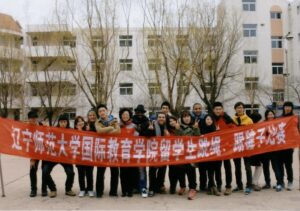
Taiwan
Kainan University
-
2018
Exchange student
- Kazuki Hatazaki
- In this essay, I would like to write about what I have learned during my one year exchange program at Kainan University in Taiwan, and my plans for future studies.

I studied abroad at Kainan University in Taiwan as an exchange student from September 2018 to June 9. My roughly one year of studying abroad in Taiwan felt very long while I was there, but looking back, it went by in a flash. During my year abroad, I learned a lot of things with my five senses, but in this report I would like to look back on some of the aspects of my studies.
I myself took Chinese and English classes at the university where I studied abroad. As for Chinese, the language spoken in Taiwan is Mandarin Chinese (Taiwanese Mandarin), and since I could use Chinese not only in class but also in my daily life, I was in an environment where I could put what I learned into practice right away. Before studying abroad, I took Chinese classes for half a year and studied it privately, but I realized that it was only by actually coming to the country to learn the language in person that I could really experience it, and this is where I felt the value of studying abroad and studying the language.
In addition, there are other courses offered in English called IHP that you can take at your study abroad destination, and you can study accounting, economics, natural sciences, etc. Therefore, you can take a variety of courses according to your interests.Regarding Chinese language classes, Kainan University has a Chinese language department, so if you want to study Chinese, you will have to take classes in that department. IHP also has Chinese language classes, but they are just basic.
The Chinese language department's classes are very high level, and are not for exchange students, but for undergraduate students. All classes are conducted in Chinese, and the speaking speed is quite fast. Furthermore, there are only a few Japanese students taking this class, so they ask thorough questions. The majority of the class is made up of Vietnamese, and their Chinese level is so high that you have to look up to see it.
The Chinese language level of the Japanese students taking this class, including myself, was not very high, and at first we suffered from not being able to understand or speak. Every time we took this class, the Japanese students were completely exhausted.
However, by persevering in class, I began to intuitively understand the concept of the four tones, and I felt like I was acquiring vocabulary day by day. By the end of my study abroad, I was able to understand 7% of the lessons in Chinese, and the teacher was nodding in understanding of what we were saying.
In addition to the classes, I made a Taiwanese roommate from the Japanese language department and we had language exchanges until late at night. The time I spent with them was invaluable, and I learned a lot and it became a good memory.Finally, Taiwan has a complex history and politics. It is a multi-ethnic country, and even though we say Taiwanese, there are many people from outside of Taiwan, aborigines, and ethnic minorities living in Taiwan. As a result, a wide variety of languages are spoken in the streets. Taiwan is also famous for being pro-Japan, and when the Great East Japan Earthquake occurred in Japan, it was the country that extended a helping hand more warmly than any other country. During my study abroad, I learned about Japan as much as I learned about Taiwan, and I often had to rethink things. I felt the importance of learning the language, and at the same time, the need to not be bound by language. Now that internationalization has made the borders of borders blur, I felt the importance of traditional culture and mother tongue.
After returning to Japan, I plan to continue studying foreign languages without forgetting what I learned during this study abroad experience, and more than that, I plan to develop an interest in and learn more about Japan.


- Watanabe Miu
- I studied abroad in Taiwan for about four months from September 2018 to January 9. At Hokkaido Bunkyo University, I was able to take Chinese language classes, but I couldn't study it as my first language, so I had to start from the basics. At Kainan University, there were several classes that started from the basics, so I was able to learn from scratch. In Taiwan, they use a unique phonetic symbol called Zhuyin, but you can study in Pinyin in class. However, most of the Taiwanese friends I met there couldn't read Pinyin, so I thought it would be better to be able to read Zhuyin if I was going to study abroad in Taiwan.
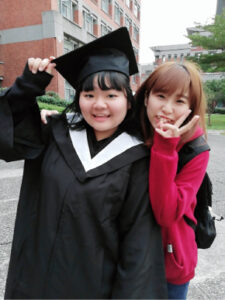
In class, I mainly learned pronunciation, vocabulary, listening, and writing. Among them, I think listening is what I improved the most. I think I improved the most because the class was conducted in Chinese. Other than Chinese, I took classes from the Japanese and English departments. In the Chinese class, there were many Japanese students, but in the English and Japanese classes, I was able to interact with students from Taiwan, Vietnam, the Philippines, and Korea. The Japanese class was conducted in Chinese, so I think it helped me learn Chinese. We were able to teach each other how to say things in Chinese and Japanese, and it was a very meaningful time. In the English class, I took a class with third-year students, and my classmates spoke English very smoothly and with good pronunciation, which inspired me to work harder.
Kainan University classes are 1 minutes long, with two classes in a row, and in the English conversation class, the first class is a small talk class where we discuss one topic, and since I don't know when I'll be assigned, I've become better at thinking about English in a short amount of time. In this class, we use long sentences to study grammar and pronunciation, so I feel that my vocabulary has increased even more. I took classes in the Chinese language, Japanese language, and English language departments, and IHP, and what I felt was different from Bunkyo University was that we made groups on LINE for each class, and there were many group assignments. The teachers also participated in the LINE group, and I felt that it was very convenient because students and teachers could easily check questions and announcements. As for assignments, there were more pair or group assignments than individual submissions, and some assignments involved going out as a group to deepen friendships. Since there was a lot of group work, I felt that there was more need for interaction between students than at Bunkyo University. This time, I studied abroad at Kainan University in Taiwan, lived my life while being exposed to Chinese, and learned the fun of Chinese. I would like to continue studying Chinese in the future. Specifically, I plan to take the Chinese Proficiency Test and HSK. Traditional characters are used in Taiwan, but the Chinese Proficiency Test cannot be taken in traditional characters up to the pre-50nd level, so I would also like to aim to learn simplified characters.


Shizu University
-
2019
Exchange student
- Yui Haraguchi
- From February to June, I had the opportunity to study abroad in Taiwan for the second time in my short university years.
This time I studied abroad for about four months. Apart from Chinese language classes (five days a week, two hours a day), I chose the classes I wanted to take, and I lived in a four-person dormitory. I made and decided everything myself. It felt like I was living alone. (I have never done that.) However, what was different from Japan was that I didn't cook for myself. The dormitory has a microwave and a water server, but no kitchen. This is because Taiwan has a culture of eating out. The food court and night market near the university were also open until late at night. (I recommend Yizhong Street or Fengjia Night Market, although they are a bit far from Jingyi University.)

I am glad that I chose Taiwan, Taichung, and Jin Yi University. There are common reasons why I like Taiwan. First, the food is delicious, second, you can get cheap tapioca drinks, and third, transportation and prices are cheap. There are also many photogenic spots, so it was worth taking photos. Another good thing about Taichung is that there are not many Japanese people in the city, so you don't have to rely on your native language. And another good thing about Jin Yi University is that the international students come from a variety of countries (China, Korea, Malaysia, Indonesia, Spain, Mongolia, America, etc.) And because there are so many international students, the events are lively. On the first Saturday, there was a barbecue, a social gathering, 1, where international students introduce their own country's culture, and a farewell party. There were many fun events from start to finish. You can make many friends from other countries through these events! You can expand your network as much as you want.
As for Chinese, I was taking classes at Bunkyo University, but I didn't review enough and honestly, I didn't have any solid vocabulary or grammar, so when I started taking Chinese classes in Taiwan, I struggled to communicate and it was hard every day. However, after about a month and a half, I felt like I was starting to understand what the people around me were saying, and I gradually started to enjoy studying Chinese. I've never been good at speaking, so there was a limit to how much I could improve my speaking. After returning to Japan, I was able to pass the Chinese Language Proficiency Test Level 1, so I was really happy to have tangible results.
Studying abroad was a turning point for me. I wrote about it as if I had only good experiences, but of course there were also unpleasant things. However, I was able to think positively, that "all the negative aspects made me stronger." Even though I was in this department, I always resisted speaking a foreign language with people. This is because I thought it was embarrassing not to be able to speak perfectly. This mindset had always been a high wall for me, so I feel that breaking down that wall was a big step forward. Thank you so much for giving me such a valuable opportunity.

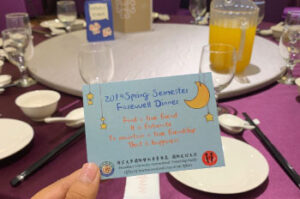
-
2016
Exchange student
- Reina Kikuchi
- I was able to absorb a lot of things during my nine-month study abroad in Taiwan from September 2016 to June 9. The person who had the strongest influence on me to want to study Chinese was a Taiwanese friend. She was a friend of my roommate, and now she is my best friend.

She happened to come to my room on the day I arrived at the dormitory, and as she couldn't stand to see me not knowing what to do, she invited me to dinner. At that time, I could only speak Chinese enough to say hello. Still, she patiently tried to communicate with me by explaining things to me over and over again until I understood. I was very impressed by her attitude. On the other hand, I felt very frustrated that I couldn't speak Chinese with her, even though it was my first day in Taiwan. I spent more and more time living with her, and we had lunch together after class, went to the night market, and she even invited me to her parents' house. Even when I met her parents and siblings, my Chinese was very poor. Still, they kept telling me that this food was traditional Taiwanese and that this is how to eat it. She took me camping at Christmas, invited me to her brother's wedding, and let me join her at a barbecue. The time I spent with her was very fulfilling, and I was able to see and feel the real life of Taiwanese people that I couldn't learn at school, which was a very valuable experience.
Thanks to her, I think I was able to maintain my desire to master Chinese. By talking with her every day after four hours of Chinese class, I was able to practice the Chinese I learned that day, and I was able to ask her many times about parts that I didn't understand, so I can't thank her enough. I think the next time I go to Taiwan will be in three years, when she has her graduation ceremony. I look forward to that and want to continue studying Chinese.


-
2012
Exchange student
- Yuka Kondo
- From September 2012 to August 9, I studied Chinese as an exchange student at Cheng Yi University in Taiwan. It was my first time abroad, and the year was full of new experiences. Every day at 2013am, I took two 8-minute Chinese classes at the language school. A Taiwanese teacher taught me Chinese in Chinese. Last semester, my class was small, with one French student, two Japanese students, and one Russian student, for a total of four students, plus the teacher. At first, I couldn't understand what the teacher was saying at all, and my friends in the class were depressed.
However, by listening to Chinese every day, my ears got used to it first. I still couldn't express what I wanted to say, but I was able to gradually understand what the teacher was saying.
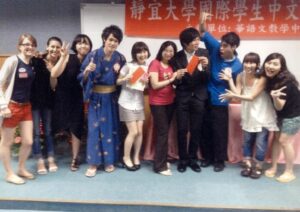
I lived in a dormitory for a year. My room was shared by three people, and the other two were Taiwanese. One of them was a student in the Japanese language department and was very good at Japanese. To me, who didn't know anything, my two roommates were like family. I was very surprised at how kind Taiwanese people are, and how well they support exchange students. I strongly felt that when I returned to Japan, I would like to be able to support Taiwanese and Chinese people who come from China and Taiwan.
In the second semester, my Japanese-speaking roommate went to Tokyo to study abroad, so I started living with a roommate who didn't understand any Japanese at all. By the time the first semester ended and the second semester began, I was no longer hesitant to speak Chinese to a certain extent, and little by little I was able to speak it proactively. Because I had more opportunities to speak Chinese compared to the first semester, I felt that my Chinese had improved more in the second semester than in the first semester. I passed the Chinese Proficiency Test Level 3 in Taipei, and even won fifth place in the intermediate-advanced division of a Chinese speech contest at the university's language center. I was very happy to see the results of my hard work coming to fruition.
Through this study abroad, I not only improved my Chinese, but also made friends from various countries, learned how to live by myself, and learned the importance and difficulty of taking action rather than relying on others. I would be happy if I can make use of this experience in my future. At first, I thought six months would be enough, but in the end, I felt that even one year was not enough. I am truly grateful to have been given this opportunity. I would be happy if I could be of help to the students from overseas who are studying at our school as exchange students during my time at the school.
Cambodia
British English Language School
-
2016
Short-term language training + internship
- Minaho Yoneda
- I am really glad that I went to Cambodia for this training. One of the reasons I chose Cambodia in the first place was that I wanted to experience the English accents and speaking styles of various people in a non-English speaking country.
I attended a language school in Siem Reap for about three weeks, and one week of that was private lessons, focusing on my weak areas and what I wanted to learn. In the first test, I understood things like negative forms, but couldn't understand them when they were spoken in English, so I started from the very basics and also practiced pronunciation. The teacher was very nice, and we also had British English, so I really looked forward to every class. Also, in a group lesson with Cambodian students, we were asked what we would do if we were president, and when we answered one by one, the Cambodian students each had their own clear opinions, such as wanting to improve roads and help the poor.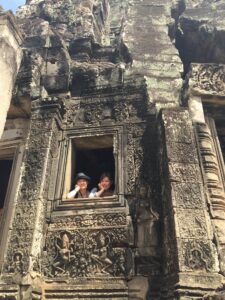
For my internship, I worked at a travel agency in Siem Reap and a bento shop in Phnom Penh. At the travel agency, I actually came up with travel plans, acted as a guide, and made estimates. My work included distributing free travel information papers to tourists, and I felt a sense of accomplishment when I was able to help customers. I also had many opportunities to use English, such as calling the airport company to confirm things and asking questions at hotel inspections. There were many interns from Japan in Cambodia, and listening to their stories inspired me. Although I had never thought about doing an internship overseas before, I wanted to try it myself.
Although the internship in Phnom Penh was short, only three days, it was also an opportunity to learn Khmer. We also had the opportunity to visit a Japanese company, where they built the interior of their clinic by themselves, and we participated in the work. They said that because there are differences in values between Japanese and Cambodian people, it takes longer than if they were working alone with Japanese people, and sometimes the necessary equipment does not arrive on time, which makes it difficult, but I admired them for being involved in a company in Cambodia even in such circumstances.
What surprised me most about coming to Cambodia was that there were more Japanese people than I expected. I met many Japanese-run shops and Japanese university students doing internships, and it was very stimulating to be able to talk to so many different people. Also, because Siem Reap is a tourist destination, people spoke to me in Japanese when I went to the market, and I felt that Japanese was more prevalent than I had thought.
When I went to Cambodia, I learned about the history of the Pol Pot regime, which I didn't know about in Japan, and also learned about the various effects that it has had on Cambodians today. I learned that many intellectuals were killed under the Pol Pot regime, and there was no one to educate them anymore, that lotus leaves were used as plates for meals, and even if the leaves were thrown away, they would return to the soil, but plastic was also thrown away in the same way, so there was garbage everywhere in Cambodia, and that this was becoming a problem, and I also learned that school teachers have lower academic ability than their students. I wanted people in Japan to know about these things, because I would not have been able to learn about them in Japan. There are still many areas where things are lacking, but seeing so many people working to solve them made me want to contribute in some way.Before I went to Cambodia, people around me would ask me why I chose Cambodia, but I wanted people to know more about the good things about Cambodia, which is different from the image people have of it. With the economy developing rapidly, I would like to see how Cambodia develops again in 10 years' time.